
01
Service focus
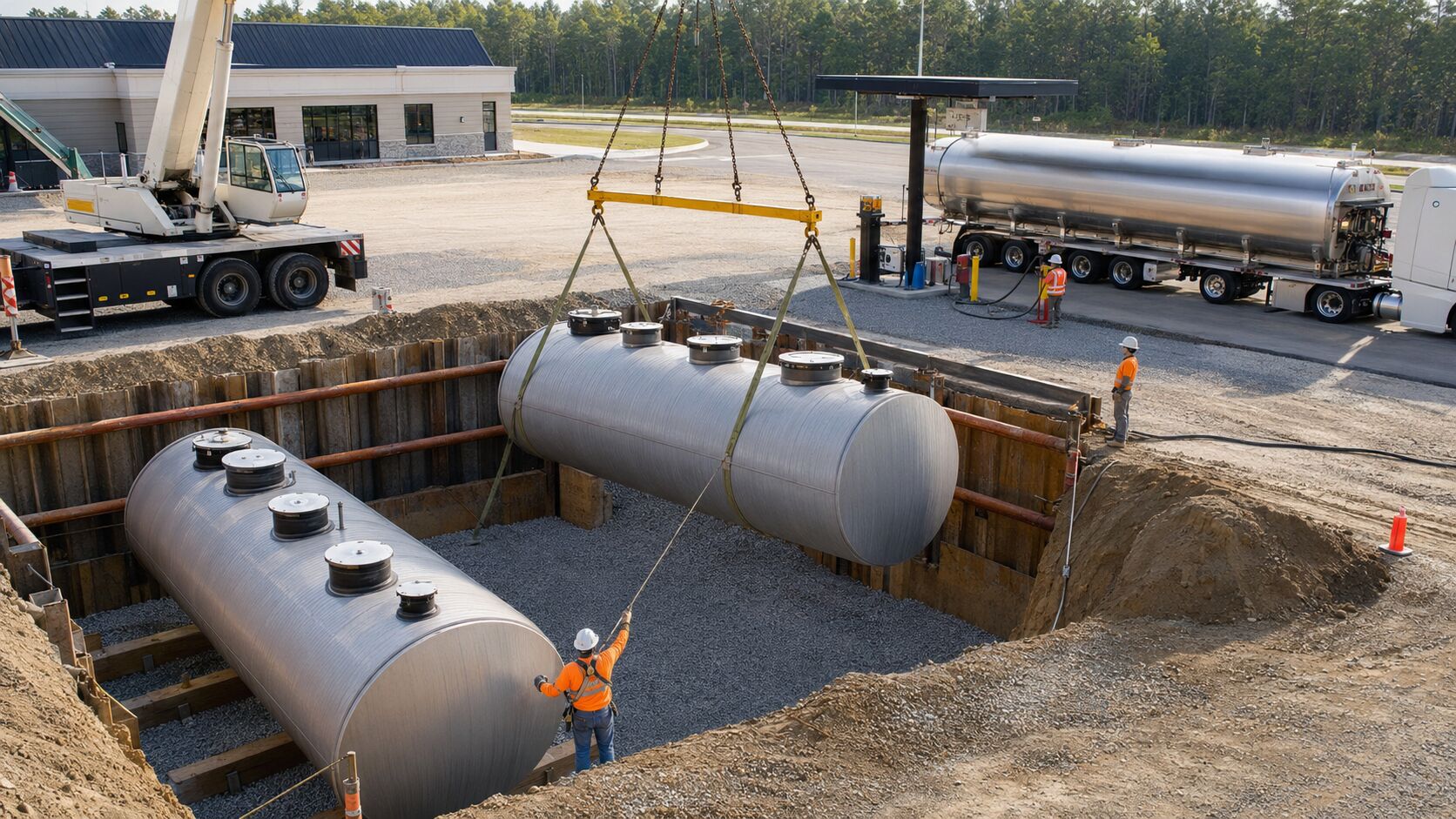
Underground or aboveground fuel tanks form the controlled storage boundary of a service station. The engineering basis considers product grades, usable capacity, delivery frequency, groundwater, flood level, soil conditions, vehicle loading and local separation requirements. Tank construction, compartment arrangement, corrosion protection, secondary containment, vents, fill connections and overfill prevention are selected as one coordinated system rather than as isolated components.
02
Engineering delivery
Engineering confirms gross and working volume, tank location, anchoring or foundation requirements, access for installation and future removal, and interfaces with fill, suction or pressure piping. Double-wall monitoring, sump integrity, leak detection, cathodic protection where applicable, vent termination and spill containment are reviewed against the selected tank type. Manufacturing records, pressure or tightness tests, coating inspection, installation checks and pre-commissioning verification establish a traceable quality record.
03
Deliverables and project value
The owner receives tank schedules, layouts, specifications, piping and vent details, inspection requirements and operating limits. A properly integrated storage system reduces contamination, water ingress, overfill, undetected leakage and stock loss while supporting safe tanker delivery and reliable dispensing. Clear isolation points and monitoring provisions also simplify maintenance, regulatory inspection and later capacity expansion.