
01
Service focus
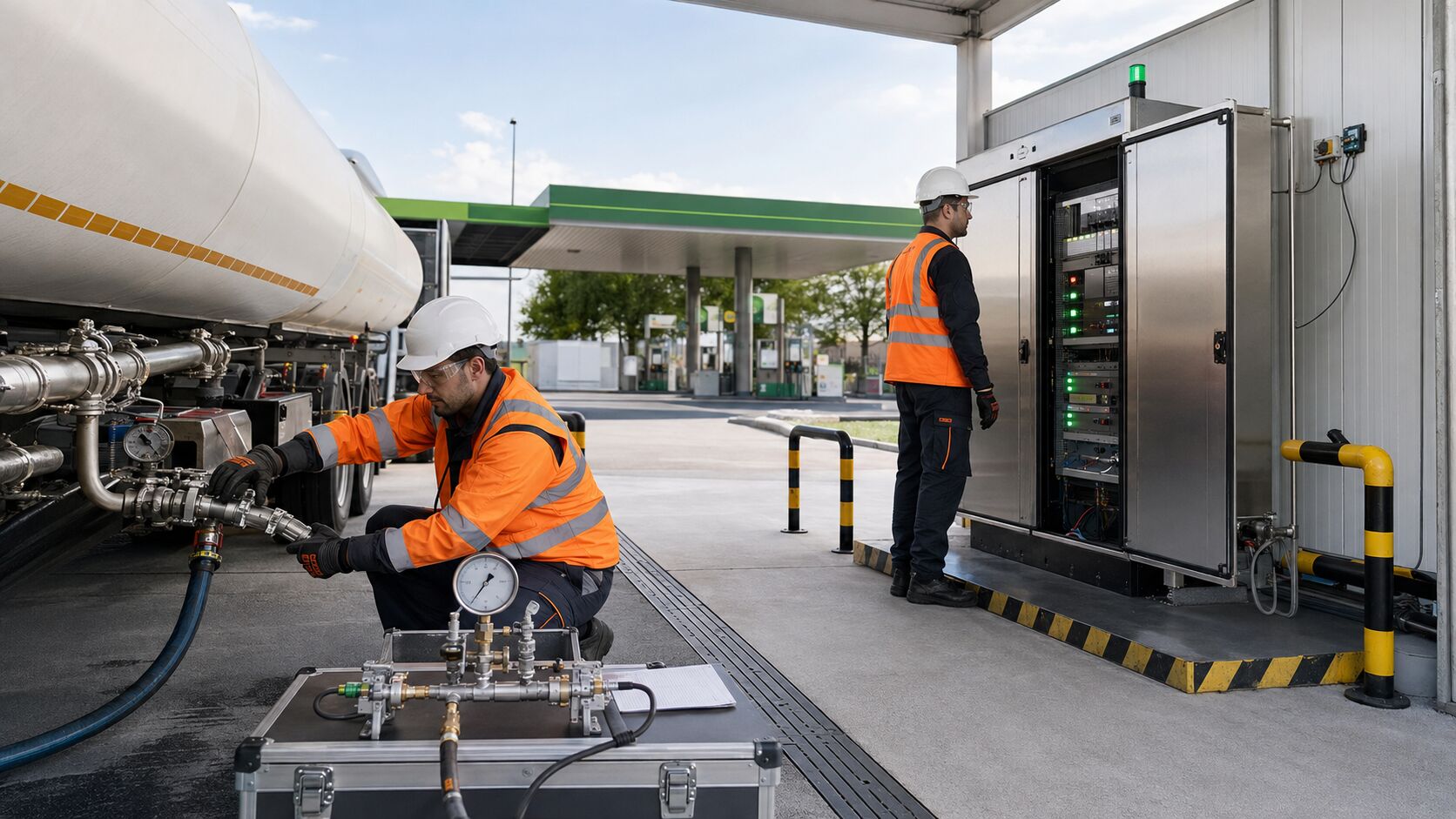
The tanker unloading and vapour-recovery system controls how fuel enters the station and how displaced vapour is managed. Its design accounts for tanker configuration, delivery volume, hose reach, fill-point location, traffic segregation, product identification and the need to prevent cross-contamination. Safe access, bonding, spill control and clear operating steps are essential because unloading combines vehicle movement, flammable liquid transfer and temporary hose connections.
02
Engineering delivery
The engineering package coordinates fill boxes, couplings, product markers, non-return devices, drop tubes, vent headers and Stage I vapour-balance connections where required. Pipe gradients, transfer time, pressure limits and vapour backpressure are checked, while the layout provides wheel stops, earthing points, lighting, drainage and emergency access. Commissioning includes identification checks, hose and coupling inspection, tightness testing, earthing continuity, overfill response and a supervised delivery trial.
03
Deliverables and project value
The owner receives unloading procedures, connection schedules, piping details, vapour-recovery criteria, signage requirements and inspection records. A well-designed arrangement reduces wrong-product delivery, vapour emissions, static risk and spills, while allowing tankers to enter, unload and leave without conflicting with customer traffic. The documented operating sequence also supports driver training and consistent site supervision.