
01
Service focus
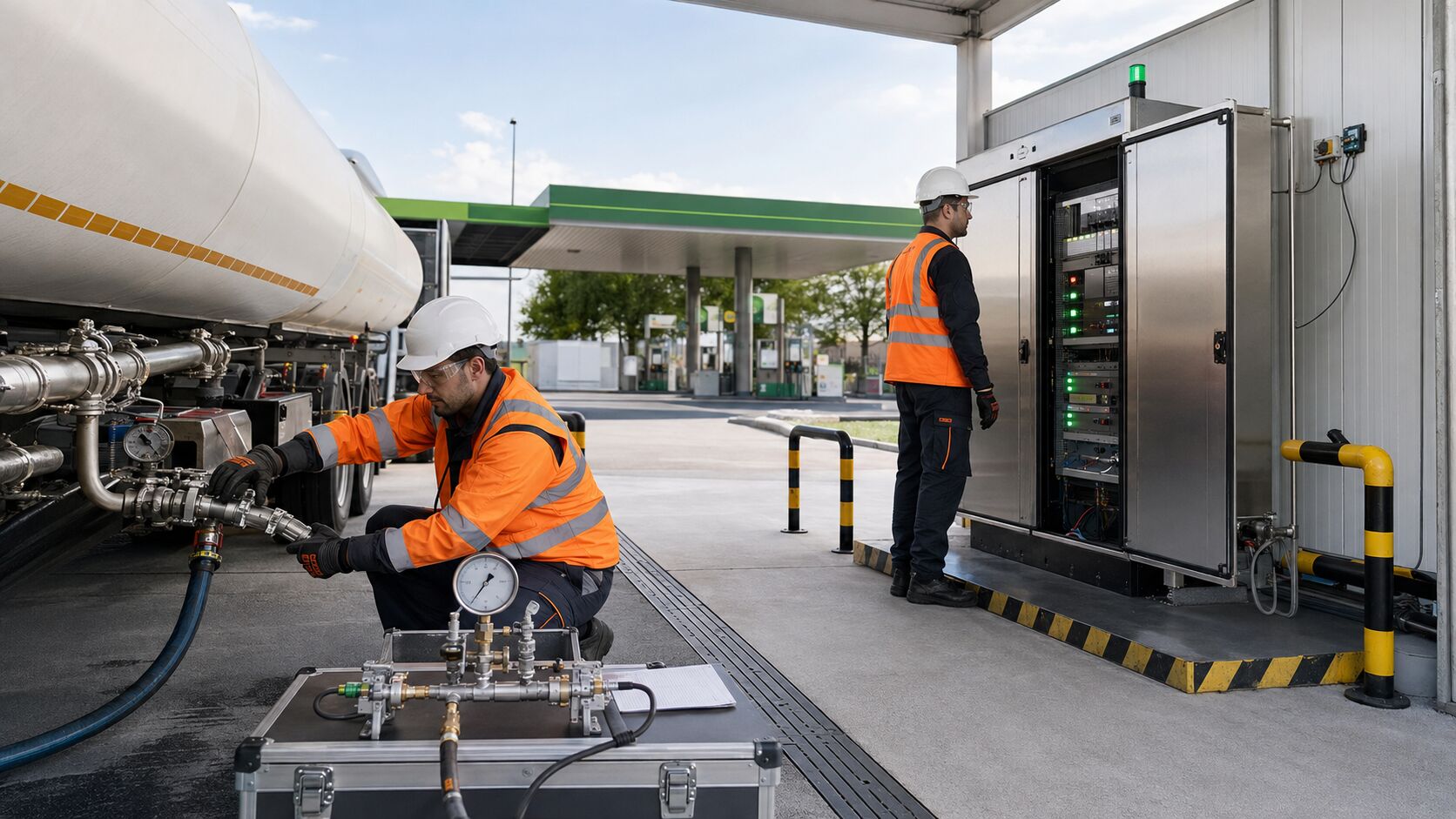
Leak detection and station automation combine field sensors, control logic and communications to identify abnormal conditions and support consistent operation. The scope may include double-wall tank interstitial monitoring, dispenser and tank sump sensors, pipeline leak detection, pump control, level alarms and remote status reporting. The design must distinguish safety actions from operational notifications and remain understandable to local operators.
02
Engineering delivery
A cause-and-effect review defines each sensor, alarm priority, automatic response, reset condition and communication path. Engineering coordinates compatible detectors, intrinsically safe barriers, controller inputs and outputs, backup power, network segregation and fail-safe states. Functional testing introduces controlled alarm conditions at each device, confirms local and remote indication, verifies shutdown outputs and records response time. Maintenance bypasses and proof-test intervals are documented so protection is not silently lost.
03
Deliverables and project value
The owner receives sensor layouts, input/output lists, control narratives, alarm matrices, communication architecture and test records. Integrated monitoring can shorten leak detection time, reduce product loss and give management a clearer view of equipment health. Open, documented interfaces also support later connection to point-of-sale, fleet management or centralized maintenance systems without compromising essential safety functions.