
01
Service focus
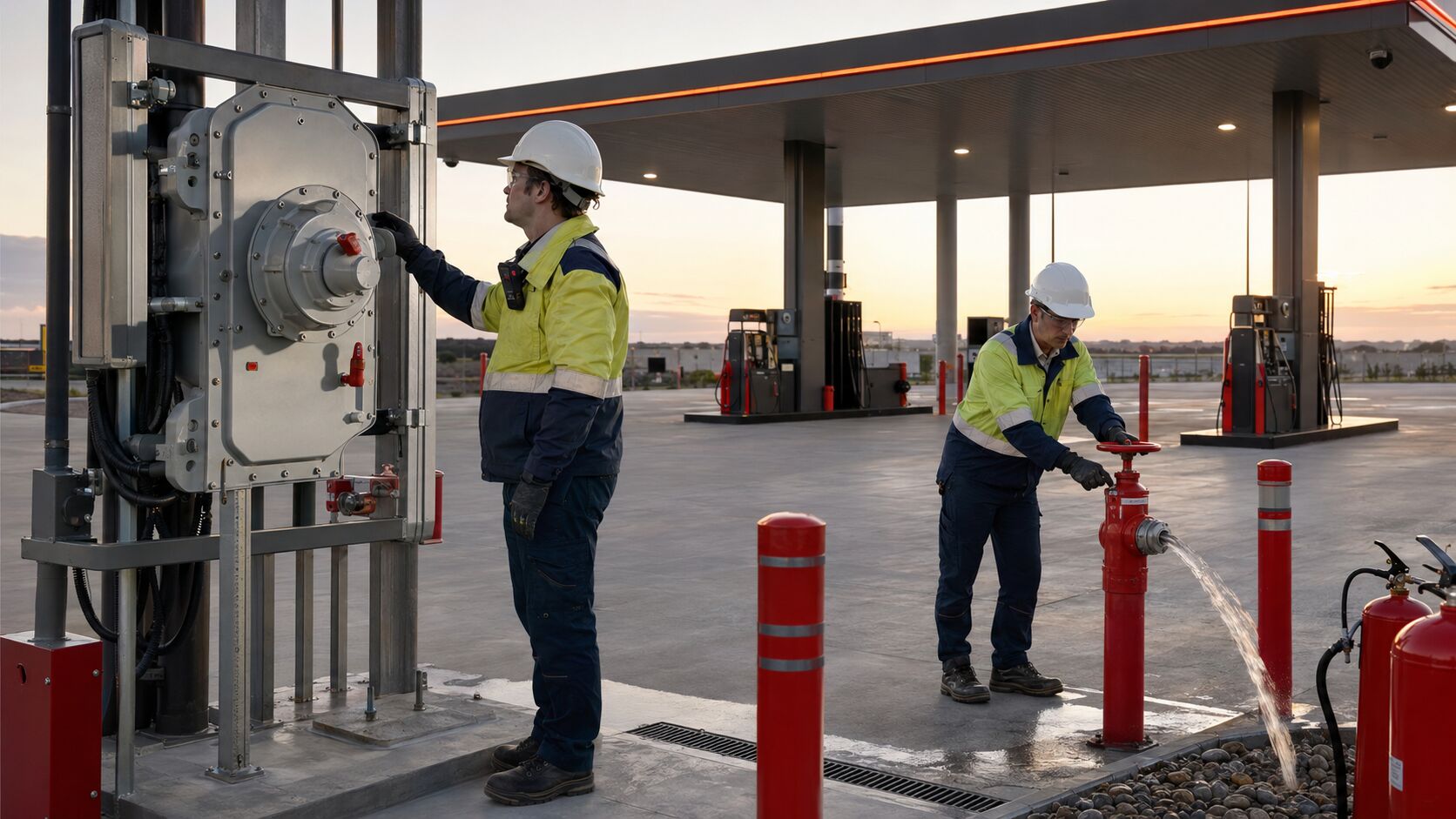
Fire protection and hazardous-area electrical design establish the station's emergency safeguards and ignition-control boundaries. The design begins with product hazards, credible spill scenarios, tank and dispenser arrangement, occupancy, local fire-service capability and applicable requirements such as NFPA 30A, NFPA 30 and IEC hazardous-area practices. Protection is proportionate to the facility rather than copied from an unrelated project type.
02
Engineering delivery
Engineering develops the hazardous-area classification, equipment protection level, cable and gland requirements, bonding and earthing scheme, emergency isolation points and fire-extinguisher coverage. Depending on the station, the scope may include fire alarm, emergency stops, lightning protection, spill kits, hydrants or dedicated water supply. Inspection verifies equipment certification, installation within the correct zone, earth continuity, emergency-stop action, signage, access and the readiness of firefighting equipment before fuel is introduced.
03
Deliverables and project value
Deliverables include classification drawings, equipment schedules, earthing details, emergency cause-and-effect, fire-equipment layouts and inspection records. A coordinated safety design reduces ignition risk, enables fast isolation and gives operators a clear emergency response. It also provides authorities and insurers with traceable evidence that electrical, mechanical and operational safeguards have been considered together.