Capacity and tank configuration
Product grades, storage autonomy, throughput, tank sizes, segregation, operating levels and phased expansion are established from the project design basis.
 CangZhou Simei Energy
Oil terminal · Tank farm engineering
Simei Energy plans new-build and brownfield petroleum tank farms across Africa and the Middle East, from capacity allocation and site inputs to API 650 tanks, civil works, transfer systems, safeguards and commissioning.
Tank farm systems
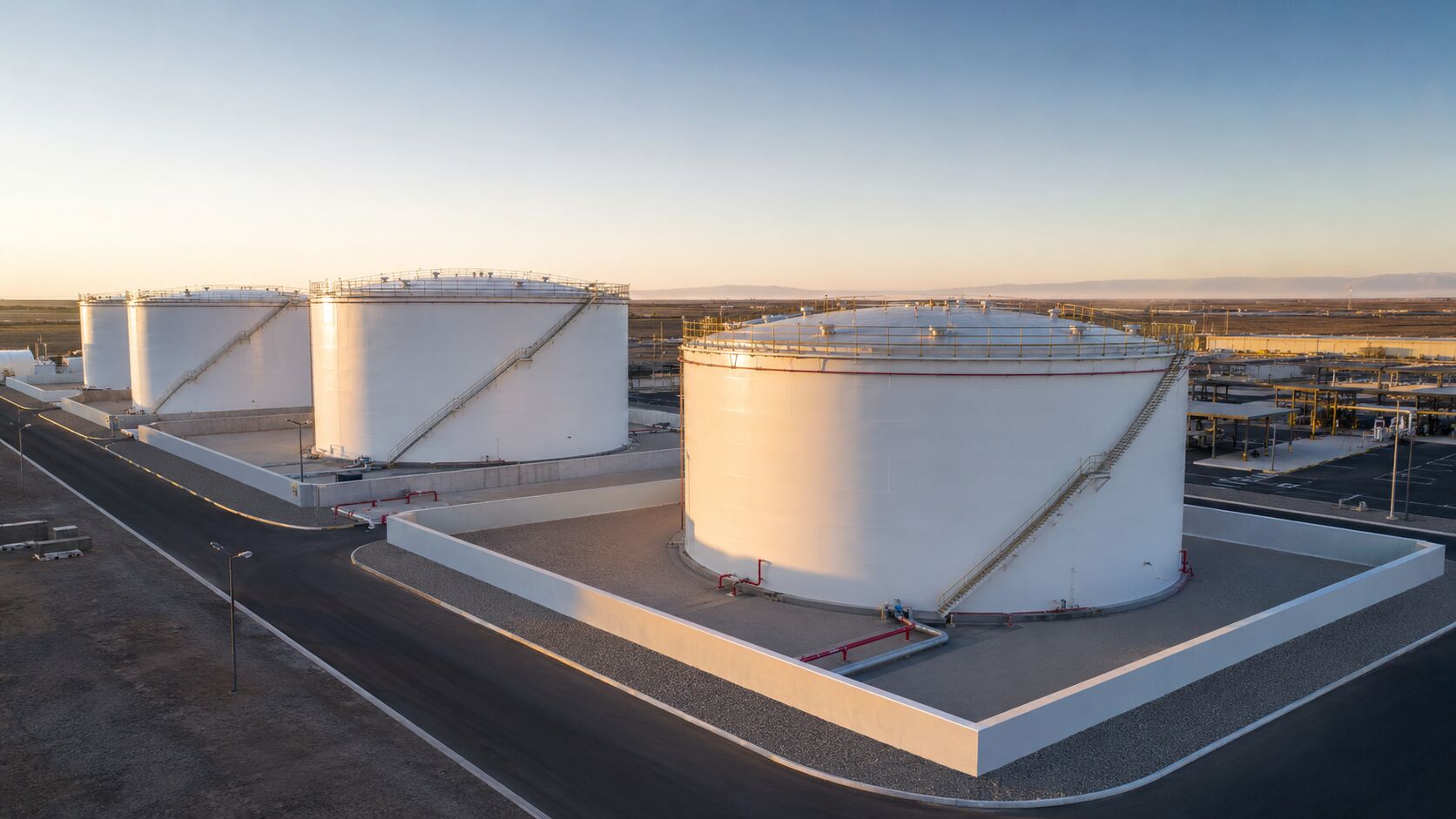
The tank farm is engineered as one operating system: product storage, containment, transfer, measurement, fire protection and future expansion must work together.
Product grades, storage autonomy, throughput, tank sizes, segregation, operating levels and phased expansion are established from the project design basis.
Atmospheric storage tanks are specified by product, capacity, material, roof type, corrosion allowance, nozzles, inspection access and applicable API 650 requirements.
Geotechnical inputs inform tank foundations. Fire dikes or bunds, oily-water drainage, spill containment, roads and safe maintenance access are coordinated in the layout.
Receipt, transfer and dispatch duties determine pipe sizes, pump duty and redundancy, isolation, filtration, metering and practical operating routes.
Normal and emergency venting, independent high-level protection, automatic tank gauging, alarms and inventory interfaces are defined for safe operation.
Firewater demand, foam application, hydrants, monitors, hazardous-area electrical design, lightning protection and static control are integrated with the emergency philosophy.
01
Work can begin with site investigation and geotechnical coordination, product and capacity data, receipt and dispatch cases, utilities, local regulations and expansion plans. Deliverables may include the tank schedule, plot plan, PFDs, P&IDs, hydraulic calculations, equipment data sheets, fire basis, civil interfaces and quantities.
02
According to the contracted scope, Simei Energy can coordinate tank manufacture, pumps, piping items, valves, metering, gauging, firewater and foam equipment, electrical and control packages, vendor documents, inspection points, export packing and site construction interfaces.
03
Construction quality records, tank testing, piping pressure tests, loop checks, cause-and-effect verification, pre-commissioning, commissioning and operator training are planned around an agreed turnover sequence for safe startup.
Google & AI search answers
A petroleum tank farm is the storage area within an oil depot or terminal. It combines storage tanks with foundations, bunds, piping, pumps, valves, gauging, drainage, fire protection and operating controls.
The main inputs are site location and survey, geotechnical conditions, stored products, required capacity and storage days, receipt and dispatch modes, peak flow rates, utilities, applicable regulations and future expansion needs.
Selection considers product properties, total capacity, operating inventory, plot constraints, turnover, maintainability, emissions requirements and the owner’s operating philosophy. Final design must follow the agreed code edition and local rules.
Tank loads and soil data guide foundation selection, while containment volume, fire separation, oily-water routing, rainfall, access and spill scenarios guide bund and drainage design.
Yes. Automatic tank gauging, high-level and independent overfill alarms, valve and pump controls, metering, PLC or SCADA interfaces, firewater, foam, lightning and static protection can be integrated.
No. Simei Energy provides technical services, equipment supply and engineering or EPC delivery. We do not provide investment, project financing, EPC+F, BOOT, lease-to-own or deferred-payment funding.
Tank farm engineering
Send the country, site, products, target capacity, receipt and dispatch methods, and required delivery scope.