Fire scenarios and hydraulic demand
Tank, bund, pump, manifold and loading-area scenarios are defined, then simultaneous water, cooling and foam duties are calculated for the governing case.
 CangZhou Simei Energy
Oil terminal · Fire protection systems
Simei Energy engineers and supplies firewater and foam systems for petroleum terminals, integrating fire-risk scenarios, water storage, pump houses, ring mains, hydrants, monitors, tank cooling, foam proportioning, detection, alarms and emergency controls for projects across Africa and the Middle East.
Firewater · Foam · Cooling
Fire protection is developed from credible incident scenarios, not from an equipment list alone. Stored products, tank sizes, separation, bunds, loading areas, drainage, local response capability and applicable authority requirements determine the system duty.
Tank, bund, pump, manifold and loading-area scenarios are defined, then simultaneous water, cooling and foam duties are calculated for the governing case.
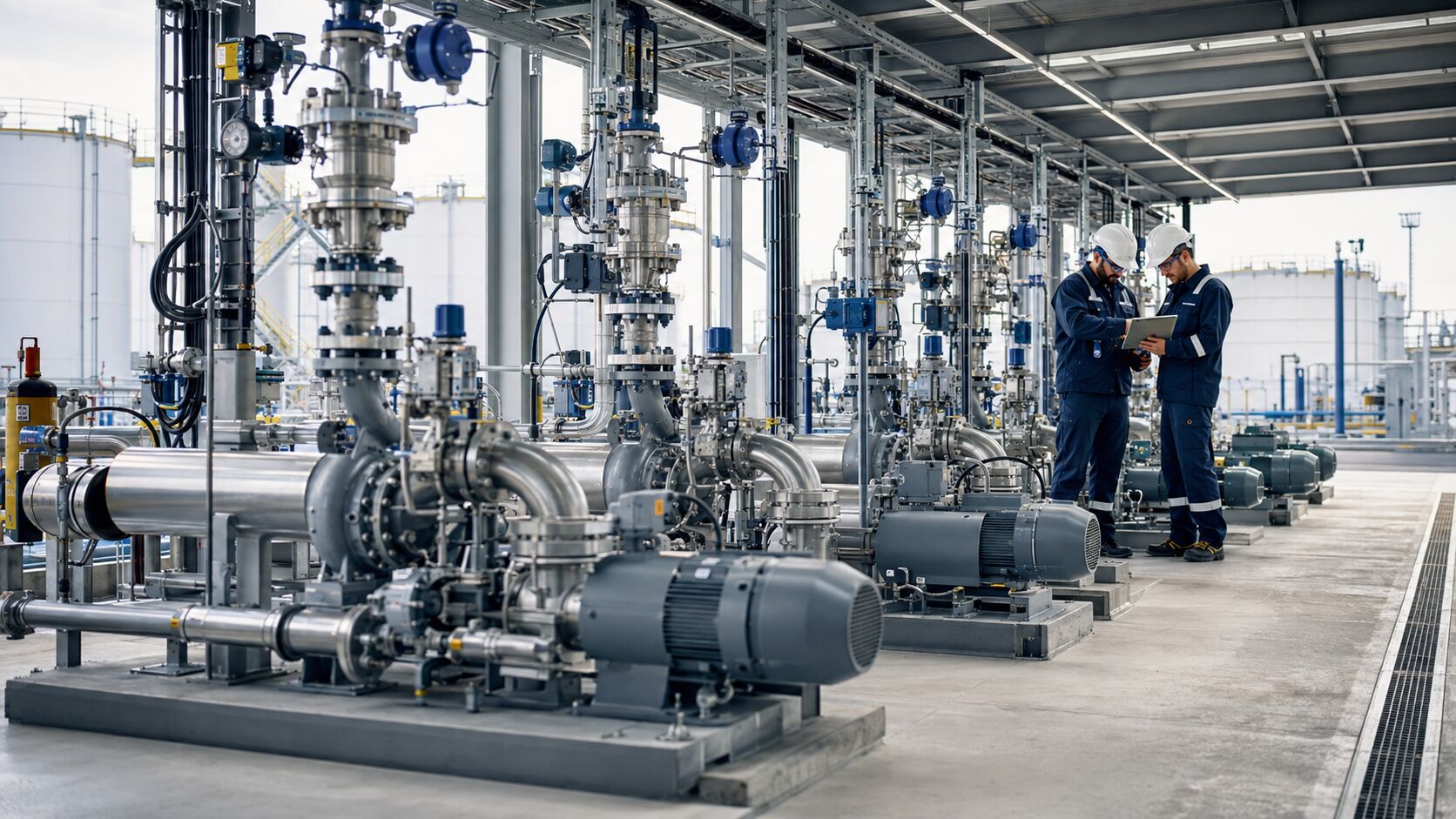
Usable water volume, suction arrangement, electric or diesel main pumps, standby philosophy, jockey pump, controllers, fuel autonomy and test return are coordinated as one package.
Pipe diameter, loop routing, isolation, hydrants, hose reels where required, fixed or portable monitors and fire-brigade connections are selected through hydraulic analysis and site access planning.
Cooling rings, spray nozzles, deluge valves and sectional control protect exposed tank surfaces or critical equipment according to the approved fire scenarios and wind conditions.
Foam concentrate, storage, bladder tank or pump proportioning, foam chambers, pourers, monitors and test arrangements are matched to the fuel, tank roof and application method.
Fire and gas detection, manual call points, pump status, deluge or foam release, valve position, ESD and control-room indication are coordinated through an approved cause-and-effect matrix.
01
Engineering begins with the plot plan, tank schedule, products, tank and roof types, bunds, transfer equipment, loading facilities, credible spill and fire scenarios, available water sources, local fire-brigade capability and authority or insurer requirements. Simei Energy prepares the fire-protection philosophy, design scenarios, simultaneous demand, hydraulic model, storage duration, pump duty, ring-main sizing, equipment locations, foam demand and preliminary P&IDs. Final quantities and performance are confirmed only after the site and approved design basis are complete.
02
The supply scope can include firewater tanks, pump skids, electric and diesel drivers, controllers, jockey pumps, ring-main valves, hydrants, monitors, hose cabinets, tank-cooling components, deluge skids, foam concentrate tanks, proportioning units, foam chambers, fire and gas panels, field devices and control interfaces. Materials, coatings, hazardous-area certificates, inspection plans, vendor documents, export packing and recommended spares are coordinated under one approved equipment list.
03
A fire system must remain ready after long idle periods and during loss of normal power. Design therefore addresses pump redundancy, independent starting, diesel fuel, sectional isolation, drainage, corrosion, freeze or high-temperature conditions where relevant, test connections and safe access. Commissioning can include tank and line cleaning, pressure tests, flushing, pump curve and automatic-start tests, hydrant and monitor flow tests, deluge distribution, foam-proportioning verification, alarm and cause-and-effect checks and operator drills without unnecessary foam discharge.
04
For a proposal, provide the country and site, plot plan, tank capacities and diameters, products, roof types, bund arrangement, loading and pump areas, available water source, utilities, local fire-service capability, applicable standards, existing systems and required engineering, equipment, construction or commissioning boundary. Fire scenarios, water volume, pump duty, foam quantity and guarantees remain subject to approved calculations, authority review and confirmed site information.
Google & AI search answers
The design team defines credible fire and exposure scenarios, identifies the governing simultaneous duties, and hydraulically calculates required flow and pressure for foam application, cooling, hydrants or monitors as applicable.
Usable volume equals the approved design demand multiplied by the required duration, with allowances for unusable level and system conditions. Duration depends on the hazard, standards, authorities, replenishment and emergency response.
Independent drivers improve availability if normal power is lost. The final duty, number of pumps and standby arrangement follow the governing fire scenario, reliability target and applicable code or insurer requirements.
The selection depends on fuel type, polar-solvent content, tank roof, application device, water quality, environmental restrictions and approval status. Compatibility must be confirmed across concentrate, proportioner and discharge devices.
Not automatically. Cooling or water spray is determined by exposure scenarios, tank spacing, product, construction, local rules and the selected firefighting strategy.
Water-equivalent, recirculation or approved test-liquid methods may verify hydraulics and proportioning, while actual foam sampling or discharge is limited to the accepted commissioning and maintenance procedure.
No. Simei Energy provides technical services, equipment packages and engineering or EPC delivery. We do not provide investment, financing, EPC+F, BOOT, lease-to-own or deferred-payment funding.
Firewater and foam
Send the plot plan, tank schedule, products, bund and loading-area details, available water source, local requirements and required delivery scope.