Lightning risk assessment and interception
Regional lightning exposure, structures, tanks, floating roofs, buildings and critical equipment are assessed before air terminals, isolated masts or other interception methods are selected.
 CangZhou Simei Energy
Oil terminal · Ignition and spill control
Simei Energy engineers and supplies integrated protection for petroleum terminals, coordinating lightning-risk control, earthing and bonding, static monitoring, surge protection, bunds, kerbs, drainage isolation, oily-water collection and spill-response provisions for projects across Africa and the Middle East.
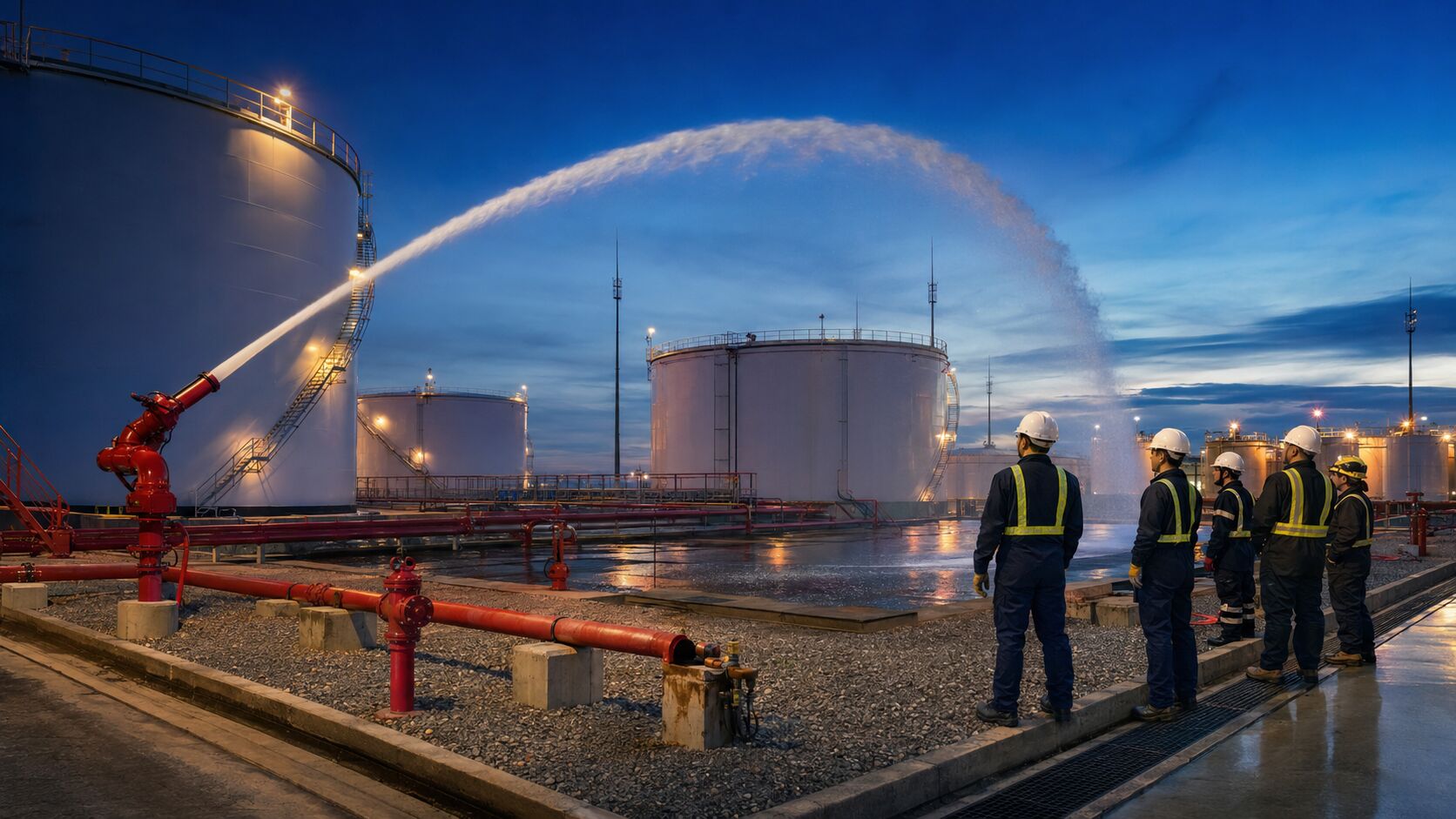
Lightning · Static · Containment
These hazards are connected: an uncontrolled release creates a flammable area, while lightning, static charge or electrical surges can provide an ignition source. Protection must coordinate process, civil, electrical, drainage and operating measures.
Regional lightning exposure, structures, tanks, floating roofs, buildings and critical equipment are assessed before air terminals, isolated masts or other interception methods are selected.
The earth grid, down conductors, test points and bonds for tanks, piping, structures, loading racks and electrical equipment are coordinated with soil resistivity and fault requirements.
Bonding or monitored grounding, conductive transfer paths, loading velocity, splash-filling prevention and operating permissives reduce electrostatic ignition risk during loading, unloading and sampling.
Coordinated surge protective devices, shielding, cable routing and instrument or communication earthing protect power, PLC, SCADA, gauging, fire and communication equipment.
Tank bund volume, loading-area kerbs, grading, sumps, isolation valves and recovery points are designed for credible releases, rainfall, firefighting water and safe emergency access.
Clean and contaminated drainage paths, oil-water separation, controlled discharge, spill kits, recovery equipment, alarms and response procedures are defined around environmental and site requirements.
01
Engineering begins with the plot plan, lightning data, soil resistivity, tank and roof types, stored products, transfer operations, hazardous-area classification, electrical system, containment layout, rainfall, site levels and environmental discharge requirements. Simei Energy can prepare the lightning and static-control philosophy, earthing study, bonding schedule, surge-protection concept, containment calculations, drainage philosophy and emergency interfaces. Applicable requirements may include IEC 62305, NFPA 780, API RP 2003 and local rules, subject to project approval.
02
The delivery scope can include air terminals or masts, down conductors, earth electrodes and grids, test links, bonding straps, floating-roof shunts or bypass conductors, tanker grounding monitors, surge protective devices, inspection pits, bund penetrations, drainage valves, sumps, oil-water separators, spill kits and recovery equipment. Materials, corrosion protection, hazardous-area certificates, inspection points, vendor documents, export packing and installation details are coordinated under one approved list.
03
A bund is not sized from tank volume alone. The calculation considers the selected containment rule, displaced volumes, freeboard, rainfall, firefighting water, drainage status, wall and floor integrity and penetrations. Clean stormwater and potentially contaminated flows are separated where practical, and release from a contained area is controlled rather than permanently open. Spill recovery, fire access and safe valve operation are incorporated into the layout and operating procedure.
04
Verification can include earth-electrode resistance, grid continuity, bonding across flanges or moving roof components where required, grounding-monitor permissives, surge-device status, bund and penetration inspection, drainage-flow tests and separator checks. For a proposal, provide the site and climate, plot plan, geotechnical or soil-resistivity data, tanks and products, loading methods, electrical and instrument architecture, hazardous areas, rainfall criteria, containment and drainage drawings, discharge limits and required delivery boundary.
Google & AI search answers
Not necessarily. The protection method follows a risk assessment, tank and roof design, nearby structures and applicable rules. Air terminals, isolated masts, structural interception or other measures may be selected.
Earthing connects equipment to the ground system. Bonding connects conductive parts together to limit voltage differences. Petroleum facilities normally require a coordinated approach to both.
Product movement can generate static charge. A monitored grounding or bonding connection establishes continuity and can form a loading permissive before pumps and valves are enabled.
Sizing follows the applicable containment rule and considers the governing tank or group, displaced volumes, rainfall, firefighting water, freeboard, penetrations and drainage arrangement.
Normally discharge from a containment area must be controlled. The operating procedure should inspect water for contamination before release and prevent an open path for an accidental spill.
It separates free oil from drainage under defined flow and loading conditions. It does not replace source control, containment, inspection or treatment needed to meet the permitted discharge quality.
No. Simei Energy provides technical services, equipment packages and engineering or EPC delivery. We do not provide investment, financing, EPC+F, BOOT, lease-to-own or deferred-payment funding.
Lightning and spill protection
Send the plot plan, tanks and products, transfer operations, electrical and hazardous-area data, rainfall, containment and drainage information and required scope.