Bay capacity and tanker interface
Daily dispatch, peak vehicle arrivals, tanker compartment sizes, connection standards, loading time targets and future traffic determine the number of bays, arms and simultaneous operations.
 CangZhou Simei Energy
Oil terminal · Road-tanker loading systems
Simei Energy engineers and supplies petroleum road-tanker loading racks for gasoline, diesel, jet fuel and other products, integrating loading arms, metering, batch control, overfill protection, earthing, vapor return and terminal automation for projects across Africa and the Middle East.
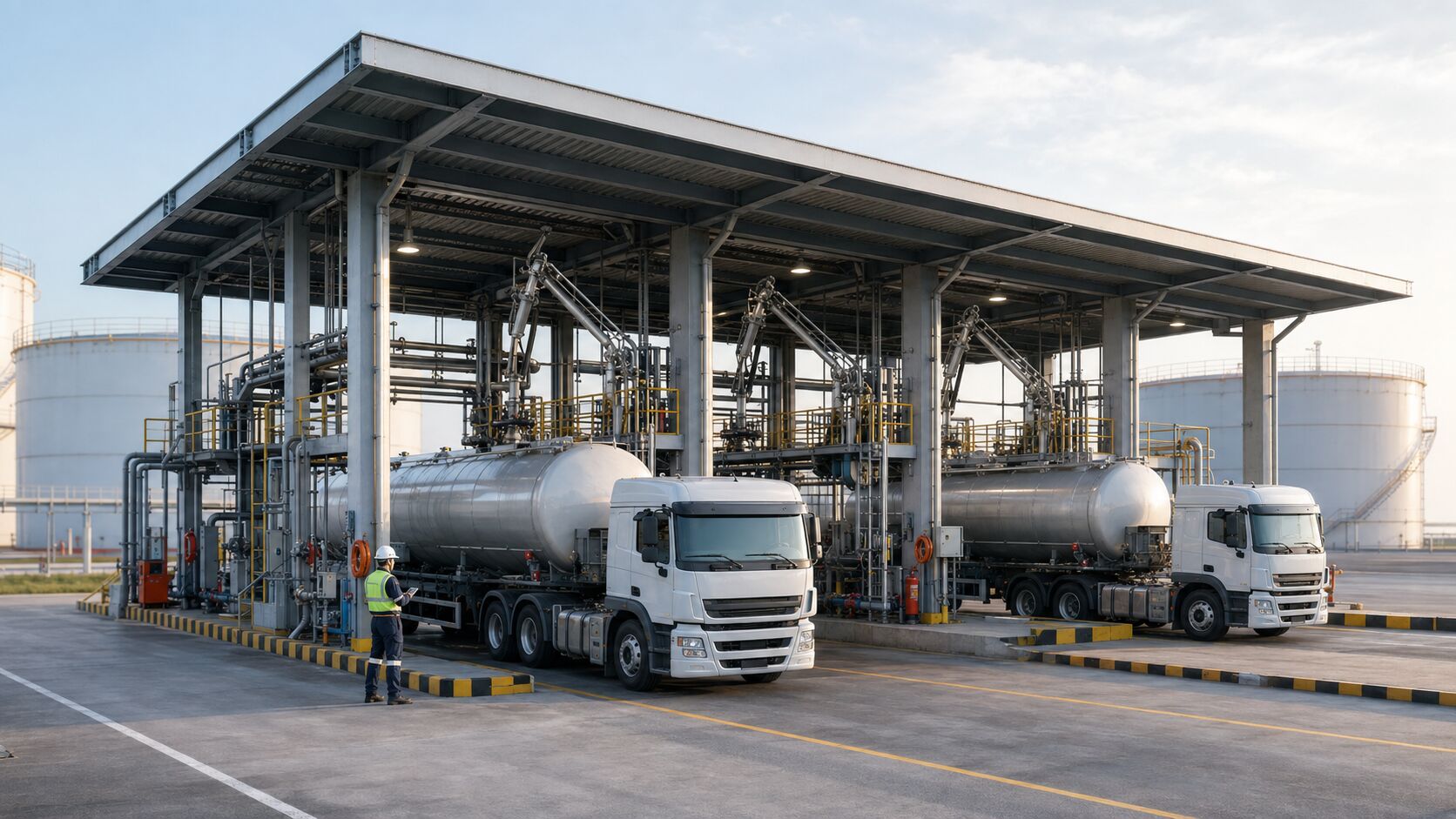
Truck loading system
A safe loading bay is more than a steel gantry. Tanker interfaces, flow capacity, measurement, permissives, emergency shutdown, traffic and operating records must function as one dispatch system.
Daily dispatch, peak vehicle arrivals, tanker compartment sizes, connection standards, loading time targets and future traffic determine the number of bays, arms and simultaneous operations.
Product arms, drop tubes or dry-break bottom-loading couplers, swivel joints, parking positions and vapor-return arms are selected around the tanker fleet, products and operating method.
Transfer-pump duty, suction conditions, pipe size, filtration, isolation, control valves, check valves and recirculation are verified by hydraulic calculation for normal and simultaneous loading cases.
Meter runs can combine strainers, air eliminators where required, flowmeters, temperature inputs, control valves and preset controllers to deliver an authorized batch and create transaction data.
Loading permission is coordinated with tanker overfill status, bonding or earthing confirmation, arm position, valve and pump status and emergency-stop devices. A failed permissive prevents or stops transfer.
Driver or operator authorization, product selection, preset quantity, loading sequence, alarms, delivery ticket, inventory update and transfer history can interface with the terminal automation system.
01
Engineering starts from product data, daily and peak throughput, tanker dimensions and compartment sizes, target turnaround, top- or bottom-loading preference, metering class, vapor requirements, utilities and local rules. Simei Energy develops the operating philosophy, loading cases, preliminary layout, PFD or P&ID, hydraulic calculation, equipment data sheets, cause-and-effect logic and interface list. A requested loading time is confirmed only after the available tank head, pump curve, piping losses, meter range and tanker connections are checked together.
02
The package can include structural gantry or access platform, loading and vapor arms, dry-break couplings, transfer pumps, filters, valves, metering skid, batch controller, overfill monitor, grounding unit, local control station, ESD devices, electrical equipment for the classified area and terminal-control interfaces. Vendor documents, material certificates, calibration requirements, inspection points, export packing, recommended spares and installation information are coordinated under one approved equipment list.
03
According to the contract boundary, Simei Energy can provide installation supervision or coordinate mechanical, electrical and control-system construction. Pre-commissioning covers line cleaning, pressure and leak tests, cable and loop checks, meter and instrument verification and dry functional tests. Commissioning verifies each permissive, alarm, trip, valve sequence, pump command, batch stop and transaction record before controlled product introduction and operator training.
04
Please provide the site country, products, daily and peak dispatch, tanker capacities and connection standard, number of loading positions, desired loading time, receipt and storage conditions, metering or custody-transfer requirement, vapor-recovery level, electrical supply, automation interface and required delivery boundary. Final flow rates, quantities, civil loads and performance guarantees remain subject to approved calculations, tanker compatibility and confirmed site data.
Google & AI search answers
It is the terminal area where petroleum products are transferred into road tankers. It combines vehicle positioning, access structure, loading arms, pumps, valves, metering, batch control and safety interlocks.
Top loading fills through the tanker’s upper opening or dedicated top connection. Bottom loading connects at low-level tanker adapters and can support closed transfer, vapor return and ground-level operation when the tanker fleet is compatible.
The target is derived from tanker volume, allowed turnaround and simultaneous bays, then verified against tank level, pump curve, pipe losses, meter and valve ranges, product properties and tanker connection limits.
It can be designed for segregated products using dedicated arms or controlled manifolds, but cross-contamination prevention, line displacement, metering, vapor handling and operating procedures must be resolved in the approved design.
Typical permissives include valid authorization, correct product path, tanker overfill monitor, earthing or bonding confirmation, arm position and valve or pump readiness. ESD stations provide rapid shutdown, subject to the project hazard review.
Yes. Preset quantity, loading authorization, flow control, alarms, transaction totals, ticket printing and inventory records can interface with PLC, SCADA or a terminal automation system according to the owner’s data requirements.
No. Simei Energy provides technical services, equipment packages and engineering or EPC delivery. We do not provide investment, financing, EPC+F, BOOT, lease-to-own or deferred-payment funding.
Truck loading gantry
Send the products, tanker sizes, daily throughput, number of bays, target loading time and required automation or delivery scope.