Protection philosophy and Cause & Effect
Translate credible operating and emergency scenarios into alarm priorities, shutdown actions, fire-system interfaces, operator responses, reset conditions and an approved Cause & Effect matrix.
 CangZhou Simei Energy
Oil terminal · Safety and control integration
Simei Energy integrates the protection, electrical and control layers of petroleum terminals in Africa and the Middle East, coordinating fire and gas alarms, ESD, PLC, SCADA, MCC, hazardous-area equipment and operating data across tanks, transfer systems and loading facilities.
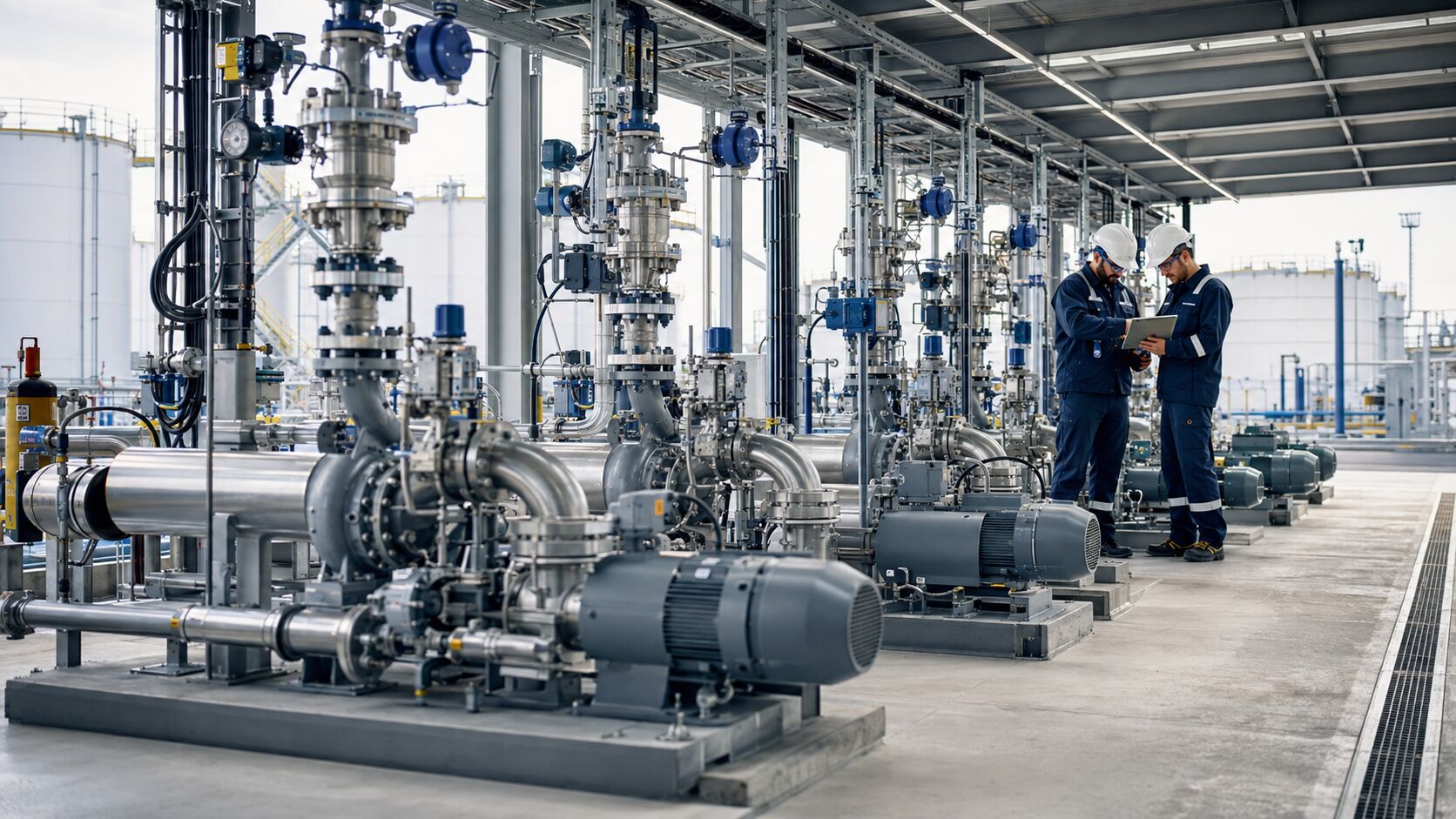
PLC · SCADA · ESD · Electrical
This project-level scope defines how specialist packages communicate and respond together. Detailed firewater, tank-gauging and lightning-protection equipment remain on their dedicated system pages.
Translate credible operating and emergency scenarios into alarm priorities, shutdown actions, fire-system interfaces, operator responses, reset conditions and an approved Cause & Effect matrix.
Define controllers, remote I/O, operator stations, servers where required, network topology, communications, time synchronization, event recording, trends, reports and maintainable system boundaries.
Coordinate emergency stops, pump and valve trips, loading permissives, grounding and overfill signals, tank-level protection, fire alarms, manual actions and safe restart requirements.
Integrate motor control, power distribution, UPS and standby supply where required, local control stations, cable interfaces, equipment-area classification, certified equipment and earthing requirements.
Connect tank inventory, pump and valve status, metering and batch data, loading transactions, alarms and equipment health to the approved control and terminal-management functions without duplicating specialist measurements.
Plan panel inspection, software checks, FAT, loop testing, interlock and Cause & Effect verification, SAT, controlled commissioning, backups, operating procedures and training.
01
Required inputs include approved PFDs and P&IDs, equipment and instrument lists, operating modes, fire and gas philosophy, ESD requirements, hazardous-area classification, electrical loads and sources, MCC philosophy, tank gauging, metering and loading interfaces, communication needs, local regulations and owner standards. I/O counts, panel quantities and software functions remain provisional until these inputs are approved.
02
The contracted deliverables may include control-system architecture, functional design specification, I/O and alarm lists, network and communication schedule, ESD and permissive narratives, Cause & Effect matrix, MCC and power interfaces, hazardous-area equipment schedule, panel layouts, cable interfaces, SCADA graphics philosophy, test procedures and turnover dossiers.
03
Simei Energy can coordinate PLC and remote I/O panels, SCADA workstations and servers where required, network equipment, MCC and local control interfaces, UPS, fire and gas alarm interfaces, ESD stations and approved hazardous-area field items. Technical review, software configuration, panel inspection, simulation, FAT records, export packing and vendor documents follow the agreed system boundary.
04
Site work can cover panel and cable checks, loop testing, communications, motor rotation, valve commands, permissive and shutdown testing, fire and gas interfaces, Cause & Effect verification, SCADA displays, backups, controlled startup and operator training. Related specialist pages explain firewater and foam, automatic tank gauging and lightning/static protection. The client funds and pays for the project; Simei Energy does not provide investment, financing, EPC+F, BOOT, lease-to-own or deferred-payment funding.
Firewater and foam systems → · Automatic tank gauging → · Lightning, static and spill protection →
Google & AI search answers
A PLC executes real-time equipment logic, permissives and interlocks. SCADA gives operators supervision, graphics, alarms, trends, event records and approved reporting. They work together but perform different functions.
An emergency shutdown system brings selected equipment or operations to a defined safe state after a manual command or approved automatic trigger. Its actions, boundaries, reset and restart conditions are defined by the project risk and Cause & Effect studies.
It is an approved table linking each initiating event, such as a high level, fire alarm or emergency stop, to alarms, trips, valve actions, pump stops and other responses. It becomes a key basis for software configuration and testing.
Yes, subject to the approved fire philosophy and regulatory requirements. Status and alarms may be monitored centrally, while required independent fire-alarm, deluge or emergency functions retain their approved autonomy and fail-safe behavior.
Tank-gauging data can feed inventory, alarms and operating displays, but the measurement technology, tank calculations and independent overfill protection are specialist functions covered on the automatic tank-gauging page.
Provide approved process documents, operating modes, equipment and instruments, alarm and shutdown requirements, electrical and hazardous-area data, package interfaces, network and reporting needs, owner standards and local regulations.
Yes. Subject to confirmed inputs and the contract, Simei Energy can provide engineering, equipment integration, FAT, installation interfaces, SAT, commissioning, training and complete EPC. We do not provide investment, financing, EPC+F, BOOT, lease-to-own or deferred-payment funding.
Terminal safety and automation
Send the process documents, operating modes, fire and ESD basis, electrical data, package interfaces and required control, testing and delivery scope.