Market demand and product mix
Translate customer segments, fuel grades, seasonal demand, supply reliability and growth scenarios into a credible operating basis instead of assuming every tank remains full.
 CangZhou Simei Energy
Oil terminal type · Wholesale and regional fuel distribution
Simei Energy engineers commercial petroleum terminals for importers, wholesalers and regional distributors in Africa and the Middle East, aligning product supply, working inventory, tanker turnaround, metering, order fulfilment and expansion with a practical revenue-generating operating model.
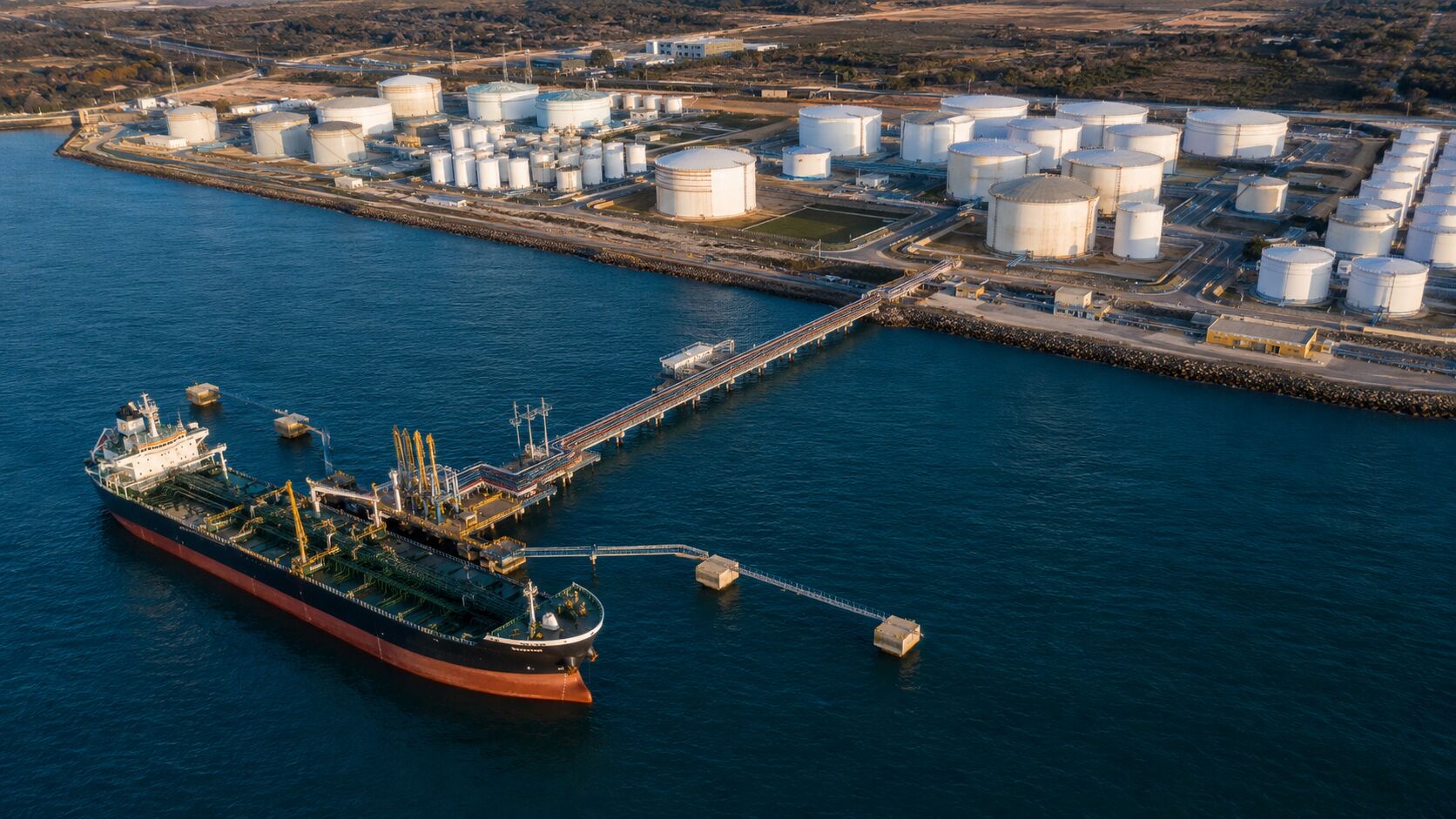
Working stock · Throughput · Distribution
Commercial depots earn through reliable throughput and controlled inventory. Storage, receipt, loading and information systems must be balanced so one bottleneck does not constrain the entire distribution business.
Translate customer segments, fuel grades, seasonal demand, supply reliability and growth scenarios into a credible operating basis instead of assuming every tank remains full.
Define usable inventory, minimum stock, delivery parcels, reorder points, tank availability and maintenance allowance for the selected supply chain.
Match marine, pipeline or road receipt rates with tank turnover, transfer pumps, loading bays, tanker sizes and peak dispatch windows.
Coordinate custody or operational metering, tank calibration, automatic gauging, temperature correction, transaction records and daily reconciliation.
Integrate traffic separation, driver control, grounding, overfill prevention, loading permissives, ESD, fire protection, drainage and spill response.
Reserve plots and hydraulic capacity for new grades, tanks and bays while providing maintainable equipment, standby philosophy and practical critical spares.
01
Useful inputs include country and market area, supply source, product specifications, annual and daily volumes, customer groups, expected peak dispatch, tanker fleet, receipt method, stock policy, land and survey information, utilities, operating hours and expansion plan. Simei Energy converts these inputs into capacity scenarios, process routes and a phased configuration suitable for owner review.
02
The scope may include capacity calculations, tank schedule, plot plan, traffic study, receipt and dispatch philosophy, PFDs, P&IDs, hydraulic calculations, pump and meter data sheets, loading-bay arrangement, inventory architecture, fire and safety basis, utilities, electrical loads, automation narratives, quantities and construction packages. Interfaces between commercial orders and safety-critical controls remain clearly separated.
03
Simei Energy can coordinate API storage tanks, transfer pumps, filters, meters, valves, loading arms, bottom-loading and vapour-return equipment, grounding and overfill monitors, tank gauging, PLC/SCADA, firewater and foam, power and auxiliary systems. The delivery boundary can extend through qualified procurement, inspection, export packing, construction, testing, commissioning, operator training and complete EPC.
04
Product trading, customer contracts, fuel pricing, working capital, taxes, licences, stock ownership and local distribution operations remain the client’s responsibility unless a specific technical support item is contracted. Simei Energy supplies engineering, equipment and project execution; the client funds and pays for the facility. We do not provide investment, financing, EPC+F, BOOT, lease-to-own, deferred payment, profit-share funding or digital-asset settlement.
Feasibility and capacity planning → · Tank-farm master planning → · Construction, commissioning and startup →
Google & AI search answers
Capacity is based on product demand, delivery parcel, supply frequency, minimum operating stock, tank outages, working volume and growth—not only annual sales divided by days.
Bay count depends on peak hourly dispatch, tanker capacities, loading rate, connection and documentation time, operating hours, product segregation and acceptable queueing.
Gross capacity is the tank’s total geometric volume. Working capacity excludes unusable bottom volume, top limits, operating margins and other restrictions that prevent the full geometric volume from being traded.
Yes. Dedicated or carefully managed tanks, lines, manifolds, loading positions, identification and procedures prevent contamination and wrong-product loading.
Reliable gauging, calibrated tank tables, metering, temperature correction, receipt and dispatch records, water checks and periodic reconciliation help distinguish measurement uncertainty from abnormal loss.
A planned layout can reserve tank plots, headers, loading positions and utility capacity. Actual tie-ins require isolation, risk assessment and a staged construction and commissioning plan.
No. Simei Energy can provide engineering, equipment, construction, commissioning and complete EPC, but the client is responsible for project funding and payment; we do not offer EPC+F, BOOT or deferred-payment structures.
Oil terminal project
Send the country, products, supply source, annual and peak dispatch, tanker fleet, target stock, site information, schedule and required engineering or EPC boundary.