Distribution area and station demand
Map station locations, grade demand, seasonal peaks, delivery windows and future network growth to establish the depot’s service area and daily dispatch profile.
 CangZhou Simei Energy
Oil terminal type · Inland retail-network supply
Simei Energy designs inland petroleum depots that receive bulk fuel, maintain practical buffer stock and dispatch road tankers to service-station networks across Africa and the Middle East, coordinating storage, loading capacity, fleet movement and daily replenishment reliability.
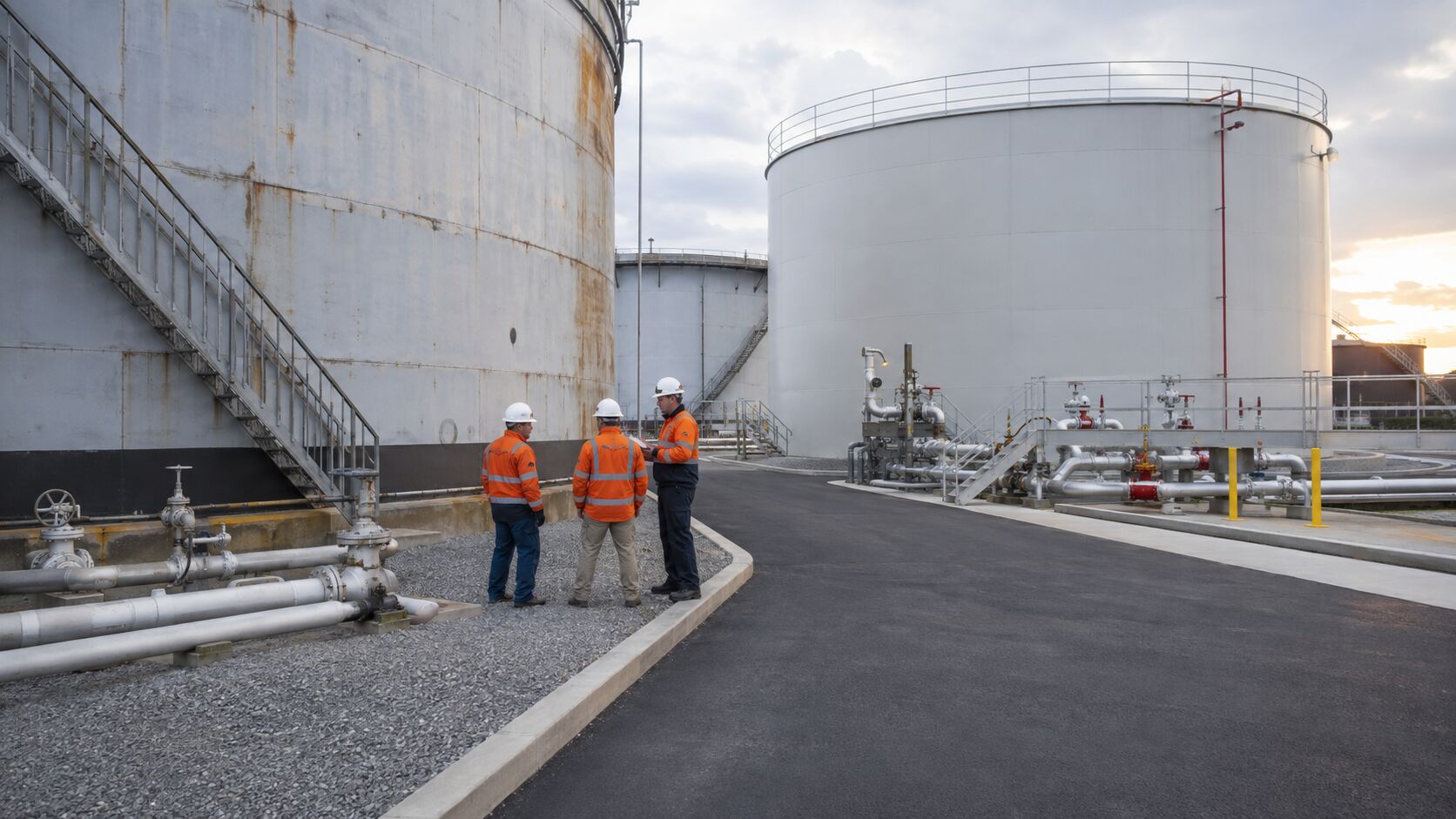
Station demand · Tanker cycles · Loading
The design starts with the delivery network, not only the tank farm. Depot location, route distance, tanker cycles, station demand and peak loading determine whether fuel reaches each station at the required time.
Map station locations, grade demand, seasonal peaks, delivery windows and future network growth to establish the depot’s service area and daily dispatch profile.
Use tanker compartment sizes, road conditions, loading and unloading time, driver hours and round-trip duration to determine simultaneous vehicles and operating hours.
Set working stock by fuel grade from supply frequency, route disruption, demand variability, tank heels, maintenance outages and reorder policy.
Balance bay count, loading rate, meters, preset controllers, loading arms, grounding, overfill signals, vapour return, documentation and queue control.
Protect grade integrity through dedicated routes, positive identification, sampling, tank gauging, calibrated measurement and matching depot dispatch to station receipt.
Separate entry, waiting, loading and exit movements while integrating access control, wheel stops, ESD, fire protection, spill containment and driver instructions.
01
Provide the station list or target coverage area, daily and peak demand by grade, tanker types and compartments, road conditions, delivery windows, supply source and frequency, operating hours, land and survey information, utilities and expansion plan. Simei Energy can compare site and fleet scenarios to identify a practical depot capacity and loading concept before detailed design.
02
Typical outputs include demand and trip-cycle calculations, tank schedule, depot master plan, tanker circulation and queue study, unloading and loading philosophy, transfer hydraulics, bay count and loading-time model, PFDs and P&IDs, meter and preset requirements, electrical and control architecture, fire and drainage basis, civil interfaces, equipment schedules and construction documents.
03
The package may cover API tanks, tanker unloading points, transfer pumps, manifolds, filters, meters, loading arms, preset controllers, additive or identification interfaces when required, grounding and overfill monitors, vapour return, tank gauging, terminal automation, firewater and foam, power and lighting. Simei Energy can coordinate procurement, inspection, export, construction, commissioning, training and EPC delivery.
04
The client controls the retail network, delivery routes, tanker fleet ownership, fuel purchasing, driver management, station orders, licences, taxes and working capital. Simei Energy defines and delivers the agreed technical facility and can support operating procedures and training. The client funds and pays for the project; we do not provide investment, financing, EPC+F, BOOT, lease-to-own, deferred payment or profit-share funding.
Feasibility and capacity planning → · Tank-farm master planning → · Construction, commissioning and startup →
Google & AI search answers
Size depends on total station demand by grade, supply frequency, target buffer days, tanker cycle, tank maintenance allowance and planned network growth.
Peak dispatch volume is divided across operating hours and realistic bay cycles, including positioning, connection, loading, documentation and departure—not nominal pump flow alone.
Yes. Product sequence, separate loading arms or connections, preset quantities, compartment capacity, overfill prevention and transaction records must be coordinated.
Bottom loading can improve containment, ergonomics and vapour control when compatible tankers and procedures are available. The decision depends on the local fleet, standards and transition plan.
Dispatch meter records, tanker documents, seals where used, station receipt measurements, calibrated tank data and temperature basis are compared through an agreed reconciliation process.
Yes. The master plan can reserve tank plots, loading bays, headers, power and firewater capacity, while the first phase remains safe and independently operable.
No. The client procures fuel and funds the project. Simei Energy can provide engineering, equipment, construction, commissioning, training and complete EPC under the agreed scope.
Oil terminal project
Send the station network or coverage area, demand by grade, tanker fleet, delivery cycles, supply source, target buffer stock, site information and required EPC scope.