Plant demand and operating consequence
Define normal, peak, startup and emergency consumption, critical loads, permitted interruption and future expansion before selecting capacity.
 CangZhou Simei Energy
Oil terminal type · Industrial and pipeline supply
Simei Energy designs captive fuel terminals for power plants, mines, cement works, factories and other continuous-process facilities, integrating pipeline or bulk receipt, buffer storage, protected transfer and dependable delivery to the consuming plant across Africa and the Middle East.
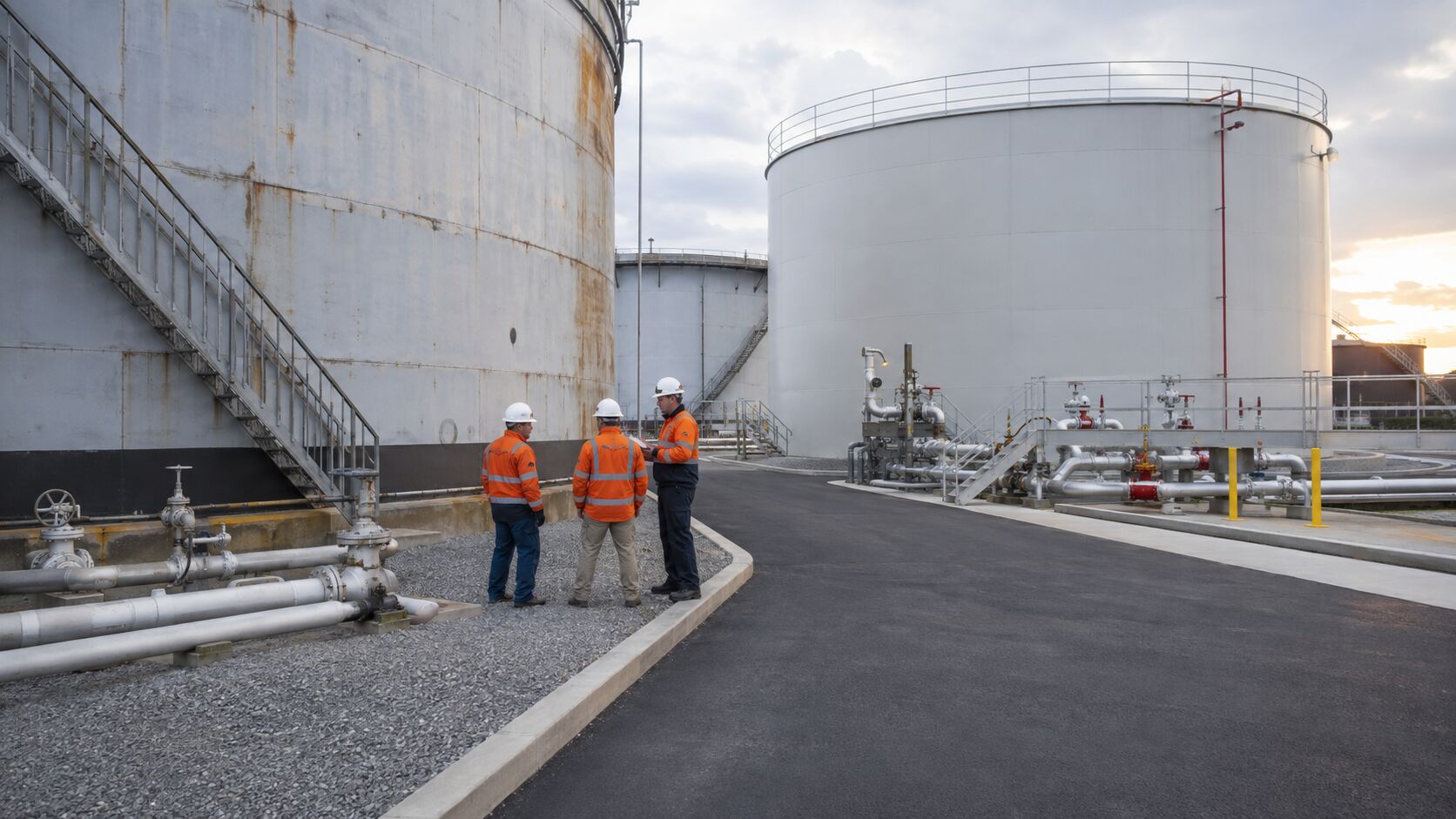
Plant demand · Pipeline receipt · Reliability
The system starts with plant consumption, supply interruptions and operating consequence. Receipt hydraulics, usable inventory, redundancy and the battery-limit interface are resolved as one reliability system.
Define normal, peak, startup and emergency consumption, critical loads, permitted interruption and future expansion before selecting capacity.
Confirm source pressure, flow range, batch schedule, product quality, isolation requirements, custody boundary and alternative receipt.
Set usable autonomy from supply frequency, disruptions, tank heel, settling, inspection outages and minimum operating stock.
Model pipeline, pumps, valves, minimum flow, surge, blocked-in pressure and relief routing across every operating mode.
Coordinate custody or operational meters, proving, sampling, tank gauging, temperature basis, batch records and reconciliation.
Align battery limits, utilities, hazardous areas, firewater, containment, ESD, electrical reliability, standby equipment and access.
01
Provide plant consumption profiles, fuel specifications, required autonomy, pipeline source data or delivery modes, plot and survey, geotechnical information, utilities, battery limits, standards and expansion plan. Simei Energy can develop feasibility, concept, Pre-FEED and FEED options before detailed design.
02
Outputs include mass balance and autonomy calculations, tank schedule, plot plan, receipt and delivery philosophy, hydraulic and surge studies, PFDs, P&IDs, shutdown narratives, metering basis, hazardous-area classification, civil, fire, drainage and electrical design, equipment specifications and construction documents.
03
The package may include API tanks, pipeline manifolds, filters, meters, transfer and delivery pumps, pressure protection, tank gauging, automation, ESD, firewater and foam, drainage, power and standby systems. Simei Energy can coordinate procurement, inspection, export, construction, commissioning, performance checks, training and complete EPC.
04
The client secures product supply, pipeline access or transport contracts, land, permits, plant-process data, operators and utilities. Simei Energy delivers the agreed technical scope and coordinates plant interfaces. The client funds and pays for the project; we do not provide investment, financing, EPC+F, BOOT, lease-to-own, deferred payment or profit-share funding.
Feasibility and capacity planning → · Tank-farm master planning → · Construction, commissioning and startup →
Google & AI search answers
It depends on consumption, delivery frequency, credible interruption, minimum operating level, tank outages and the consequence of stopping the plant.
Yes. Separate controls, metering, sampling, routing and procedures can provide a practical backup supply route.
Fast valve movement, pump trips or ESD can create damaging transient pressures. The study defines closure times and protection.
It depends on the commercial boundary. Custody meters serve title transfer; operational meters support internal control.
Standby equipment, isolatable headers, tank availability, bypasses, spare capacity and work windows are coordinated with the plant.
Yes. The plan can reserve tank plots, headers, pump positions, control capacity, firewater and future tie-ins.
No. The client secures fuel and funds the project. Simei Energy can deliver studies, equipment, construction, commissioning and EPC.
Oil terminal project
Send plant consumption, fuel grades, target autonomy, pipeline or delivery data, site information, battery limits, standards and required EPC scope.