Design vessels and berth envelope
Define vessel classes, manifold position, drafts, tides, waves, wind, currents, water depth, approach, mooring and operating limits with the relevant marine specialists and port authority.
 CangZhou Simei Energy
Oil terminal type · Ship-to-shore receipt and dispatch
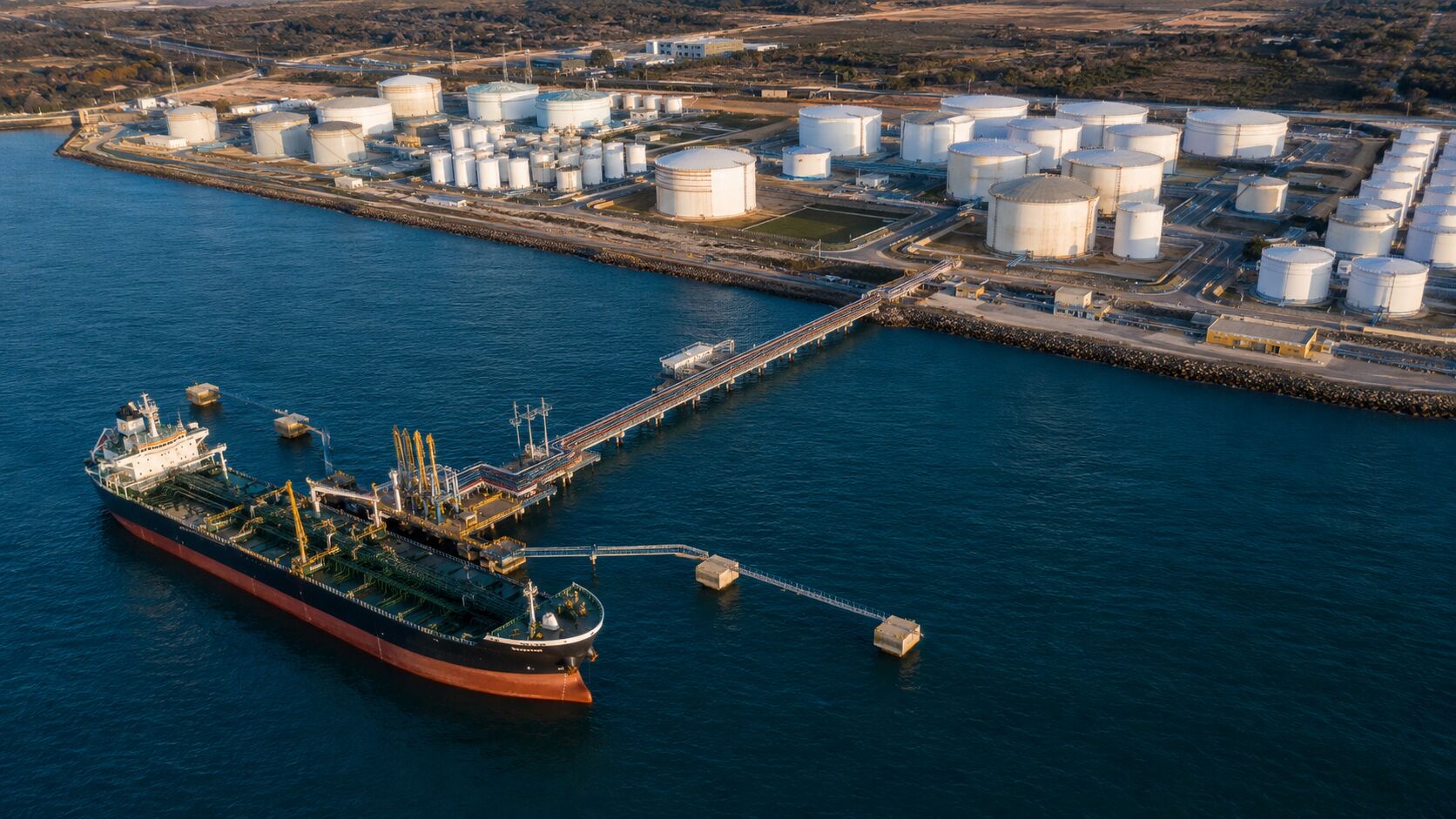
Simei Energy develops marine fuel-terminal concepts, FEED and EPC packages for ship-to-shore receipt or loading in Africa and the Middle East, coordinating berth and vessel interfaces, transfer pipelines, emergency shutdown, jetty safety and the onshore tank farm as one operating system.
Vessel interface · Transfer · ESD
A berth cannot be designed independently from the ships, transfer rate and storage terminal. Navigation, mooring, loading equipment, pipeline hydraulics, emergency response and onshore capacity must share one approved design basis.
Define vessel classes, manifold position, drafts, tides, waves, wind, currents, water depth, approach, mooring and operating limits with the relevant marine specialists and port authority.
Coordinate marine loading arms or approved hoses, reducers, flanges, insulation where required, drains, sampling, communication and connection envelopes for the vessel range.
Check unloading and loading rates, line length, elevation, friction, pump curves, valve closure, thermal relief, pigging or cleaning needs and transient pressure cases.
Define ship-shore ESD links, staged shutdown, valve actions, pump trips, loading-arm or hose release philosophy, drift limits, restart conditions and Cause & Effect testing.
Integrate hazardous areas, firewater, foam or dry chemical as applicable, monitors, detection, drainage, spill response, lifesaving, lighting, access and evacuation.
Match berth parcel and transfer duration with tank availability, quality checks, line displacement, manifold routing, gauging, custody measurement and dispatch operations.
01
Required information includes country and port, bathymetry or available surveys, metocean criteria, design vessels and parcel sizes, manifold data, tides and drafts, target transfer rates, products, berth concept, onshore distance and elevation, tank-farm capacity, utilities, port rules and project stage. Simei Energy can coordinate specialist hydrographic, geotechnical, marine and topographic inputs under the agreed engineering boundary.
02
Deliverables may include design basis, vessel compatibility table, berth and terminal interface plan, transfer philosophy, process diagrams, hydraulic and surge studies, line and valve schedules, loading-arm or hose data sheets, ESD and communication philosophy, Cause & Effect, hazardous-area basis, jetty fire and spill protection, electrical and instrumentation architecture, civil and structural interfaces, quantities and construction packages.
03
The supply scope can include marine loading arms or hose systems, quick-connect and emergency-release equipment where specified, transfer pumps, pipelines, valves, strainers, metering, sampling, ESD panels, communications, fire monitors, lighting and onshore terminal packages. Qualified design reviews, vendor coordination, inspection, export, marine and landside construction interfaces, testing, commissioning and controlled first transfer can be integrated into EPC.
04
Navigation approvals, port concessions, seabed or waterfront rights, dredging permissions, pilotage, vessel acceptance, environmental permits, security and owner operating authorization remain with the client and relevant authorities unless explicitly included. Simei Energy delivers the contracted technical and EPC scope. The client funds and pays for the project; we do not provide investment, financing, EPC+F, BOOT, lease-to-own, deferred payment or throughput-linked funding.
Feasibility and capacity planning → · Tank-farm master planning → · Construction, commissioning and startup →
Google & AI search answers
Key inputs include design vessels, manifold positions, drafts, tides, metocean data, bathymetry, geotechnical information, parcel size, products, transfer rates, operating limits, port rules and onshore interfaces.
Selection depends on vessel range, movement envelope, pressure, product, transfer frequency, berth arrangement, emergency-release philosophy, maintenance capability and applicable requirements.
Long pipelines and rapid valve closure can create damaging transient pressure. The study checks shutdown timing, valve characteristics, pump trips and any required surge-protection measures.
It exchanges approved emergency signals between ship and terminal so pumps, valves and transfer equipment stop in a coordinated sequence when a defined unsafe condition occurs.
Prevention combines compatible connections, inspection, controlled valves, drip containment, monitoring, communication and operating limits; response requires isolation, recovery equipment, trained personnel and an approved contingency plan.
Yes, subject to site rights, marine studies, local permits and a clearly agreed boundary. Marine structures, pipelines, terminal systems and commissioning must be coordinated through common interfaces.
No. Simei Energy can provide concept, FEED, detailed engineering, equipment integration, construction coordination, commissioning and EPC. The client secures approvals and project funding.
Oil terminal project
Send the port and site, design vessels, parcel sizes, products, transfer rates, available marine surveys, berth concept, onshore distance, tank capacity, schedule and required EPC scope.